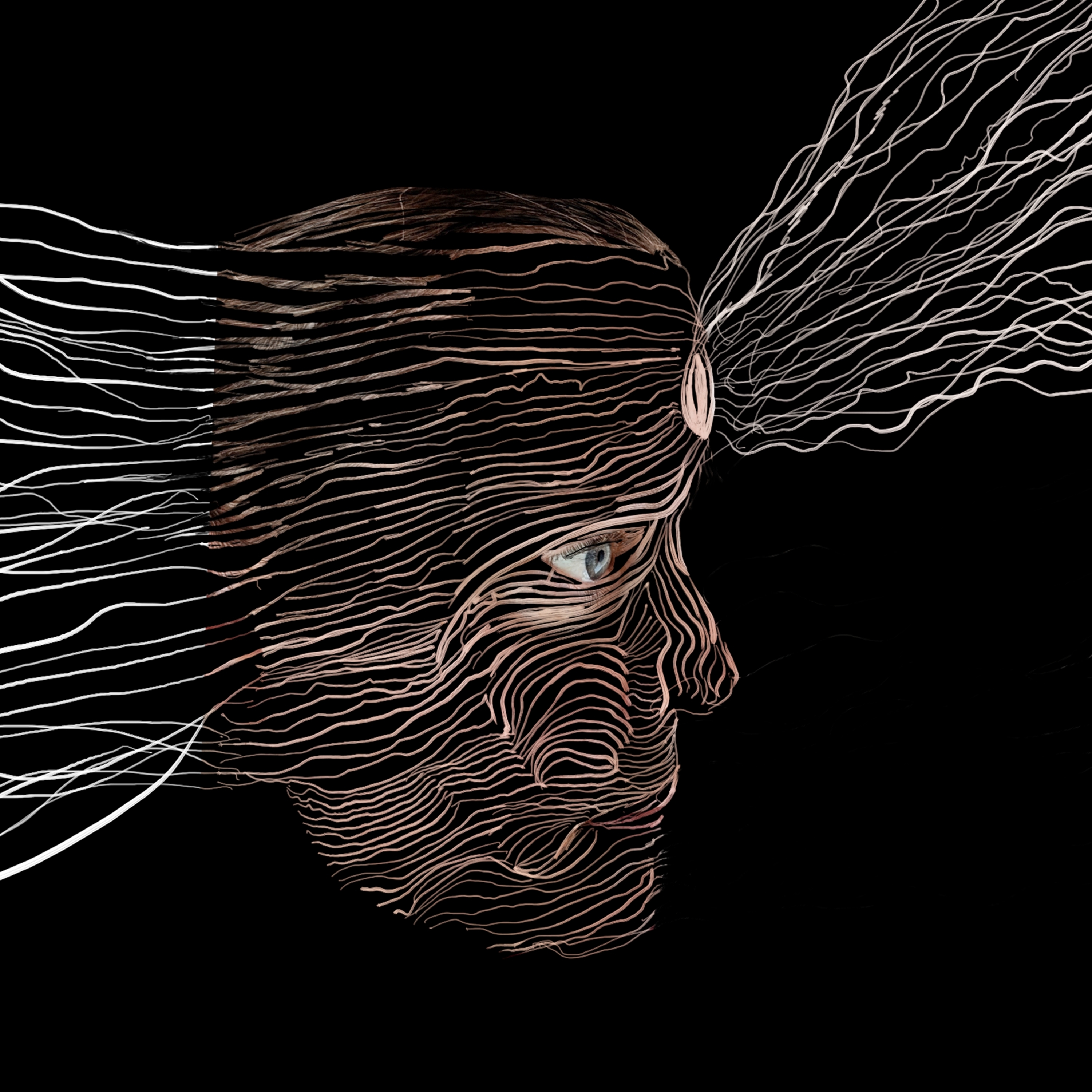
Neural Network
“Neural Network” is Idiiom’s first solo album, and it stands proudly alongside the works of pioneering electronic vocal artists such as Laurie Anderson. Each track is an improvisation, relying solely on her voice, which she manipulates through effects to create intricate loops and layered vocalisations. Much like Anderson, idiiom transforms the human voice into a multifaceted instrument—one that channels emotion, innovation and narrative in equal measure.
As we journey through life, we encounter a boundless range of emotions, each adding meaning and depth to our humanity. Some feelings are cherished, while others—like grief—are more difficult to bear.
The song “Real Sad” was born from a moment of profound sorrow and emotional honesty. On that late spring evening, after the loss of my brother, I surrendered to the rawness of my feelings, allowing the music to serve as a vessel for authentic expression. The track captures a profound emotional state, echoing spontaneity and vulnerability. Throughout the album maintains an immediacy and authenticity akin to the groundbreaking practices of electronic vocal innovators.
All sounds and lyrics were improvised, with no composition or editing beforehand or afterwards, except for the final mixing and mastering by Michel Mazza (OdNu).




Tracklisting:
- Call Me In
- Neural Network
- Real Sad
- The Sun Is In Your Side
- Solitude
Idiiom
Idiiom is the music project name of Leslie Lowder, a vocal artist exploring and experimenting with voice and technology. She is a practitioner and student of North Indian classical music for the voice, overtone singing and using the voice as a healing art. Originally from Oklahoma, USA she now resides in a small town in Upstate New York.
Reviews
Chain D.L.K.The human voice is probably the oldest instrument ever invented and still the least stable. It cracks under grief, trembles under fear, seduces, lies, prays, negotiates rent increases, leaves awkward voice notes at 2 a.m. and occasionally sings beautifully despite everything. Experimental music has spent decades trying to dismantle, process, stretch, and reimagine the voice through electronics, yet the most compelling works in that territory usually preserve some trace of human fragility beneath the circuitry. Neural Network does precisely that.
Released through Audiobulb, the debut solo album from Leslie Lowder occupies a fascinating space between improvisational vocal performance, experimental electronics, spiritual practice, and emotional document. Built entirely from improvised voice manipulated through effects and looping, the record transforms vocalization into shifting architecture without ever severing its emotional core.
The obvious comparison point is Laurie Anderson, and the connection is understandable. Like Anderson, Lowder approaches the voice not simply as carrier of melody or language, but as a mutable instrument capable of simultaneously conveying narrative, texture, abstraction, and emotional atmosphere. Yet "Neural Network" feels far less performative or conceptual in tone. Where Anderson often frames technology with ironic distance or theatrical intelligence, Lowder’s work moves inward toward something more vulnerable and spiritually exposed.
That vulnerability becomes central to the album’s identity. The fact that every sound and lyric was improvised, with no pre-composition or post-performance editing beyond mixing and mastering, gives the record a remarkable immediacy. Nothing feels overly controlled. One hears decisions occurring in real time, emotional states unfolding before they can harden into polished artistic intention.
“Call Me In” opens the album almost ceremonially. Layers of treated voice drift and fold around one another, gradually constructing a space that feels somewhere between meditation chamber and unstable digital dream. The loops are intricate but never clinical. Lowder understands intuitively that repetition in vocal music carries psychological weight differently from repetition in purely electronic composition. The body remains audible inside every cycle.
The title track deepens this interplay between organic expression and technological mediation. “Neural Network” is an apt name, though not in the obvious AI-era sense that immediately infects modern discourse whenever anyone says the word “network”. This is not music about machine intelligence replacing humanity. Instead, the album explores the tangled circuitry already existing within emotional consciousness itself: memory loops, grief echoes, spiritual resonance, internal fragmentation. Human cognition was chaotic long before computers arrived to accelerate it.
Lowder’s background in North Indian classical vocal traditions and overtone singing subtly permeates the album without becoming overt stylistic quotation. One hears an unusual sensitivity to sustained tones, harmonic interaction, and the physical resonance of breath itself. The voice often behaves less like linguistic communication than vibrational presence. Certain passages feel almost tactile in their density.
Then comes “Real Sad”, the album’s emotional center and unquestionably its most devastating piece. Created in response to the death of Lowder’s brother, the track avoids sentimental framing entirely. There is no dramatic climax, no manipulative crescendo engineered to manufacture catharsis. Instead, grief emerges as unstable texture, fractured repetition, emotional disorientation. The improvisational nature of the performance becomes crucial here because sorrow rarely arrives in coherent narrative form. It loops. It stutters. It returns unexpectedly through fragments.
What makes the piece especially powerful is its refusal to aestheticize pain into something neat or inspirational. Lowder allows vulnerability to remain unresolved. The electronics do not distance the listener from emotion; they intensify the sensation of consciousness trying to process unbearable absence in real time. It is uncomfortable in the best sense. Honest enough to resist easy beauty.
“The Sun Is In Your Side” introduces a slightly more luminous atmosphere, though the album never fully abandons its introspective gravity. The layering here becomes almost choral, voices dissolving into shimmering clusters that feel simultaneously intimate and cosmic. One begins noticing how carefully Michel Mazza’s mastering supports the material, preserving its rawness without flattening its dynamic subtleties.
“Solitude” closes the record with quiet restraint. The track feels less like conclusion than lingering emotional afterimage, the kind of silence that remains after extended internal conversation. Lowder understands that experimental vocal music often succeeds not through complexity alone, but through the tension between recognizably human sound and its gradual transformation into something stranger.
Stylistically, "Neural Network" touches multiple traditions: electroacoustic improvisation, spiritual minimalism, avant-vocal experimentation, ambient looping structures. Yet it avoids feeling academically assembled from influences. The record’s emotional sincerity keeps pulling it away from abstraction toward lived experience.
That sincerity matters because experimental music can sometimes become emotionally evasive, hiding behind process and technique until nothing vulnerable remains. Lowder does the opposite. Even under layers of effects and looping, the human body stays present throughout the album: breathing, grieving, searching, resonating.
And perhaps that is the record’s quiet triumph. "Neural Network" reminds us that technology does not necessarily erase intimacy. Sometimes it simply refracts it into new forms. Beneath all the processing, all the layered vocal manipulations, all the spectral textures, one still encounters a person attempting to navigate loss, memory, solitude, and connection through sound itself.
A deeply personal debut, then, and an unusually affecting one. Music not merely performed, but emotionally risked.
Original > HERE
Trevlad SoundsA healing vessel made of breath and wire.
Play it in the quiet hours when words fall short.
Very moving. Very fine indeed.